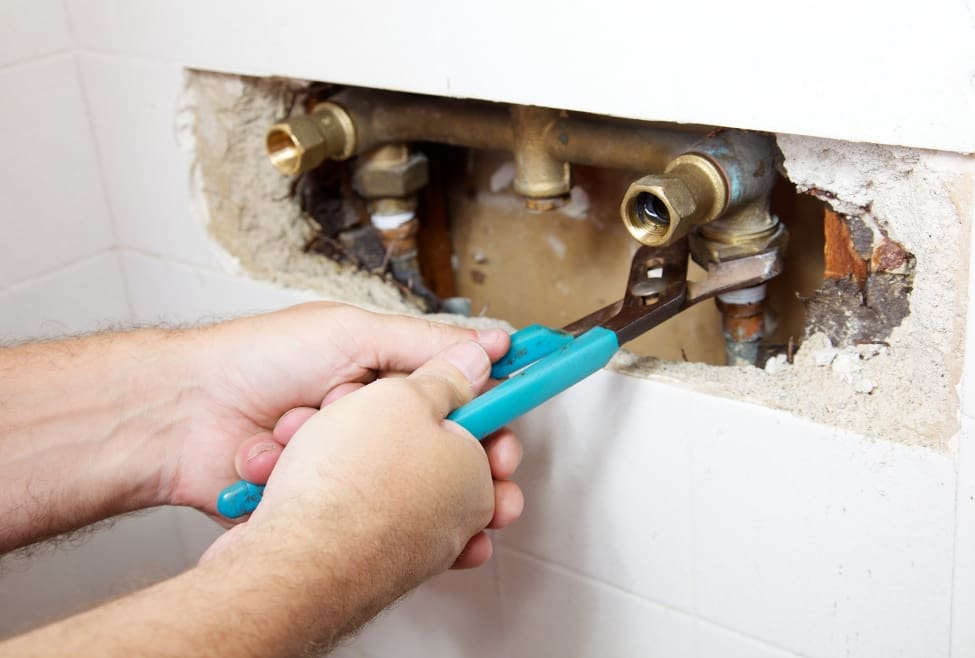
Plumbers find leaks behind walls by tracing moisture, inspecting nearby fixtures and combining diagnostic methods such as moisture meters, thermal imaging, acoustic listening and controlled plumbing tests. These techniques narrow the suspected source before opening drywall. However, stains may appear away from damaged pipes, and damp walls do not always indicate plumbing leaks. Plumbers consider possible sources, then select appropriate tests. Some investigations and repairs still require a small, carefully chosen opening.
How a Plumber Begins a Hidden Leak Investigation
An investigation starts with patterns of water damage, not equipment. Plumbers ask when moisture appeared and whether it occurs continuously or during particular activities.
Trace the Symptoms and Nearby Plumbing
The plumber inspects visible stains, bubbling paint, damp baseboards and accessible plumbing. A bathroom wall beside a shower suggests several possibilities: a supply connection, a waste pipe or failed enclosure waterproofing. Meanwhile, moisture on a kitchen wall may involve a sink connection, appliance hose or a pipe passing through the cavity.
Next comes an assessment of likely pipe routes. Hot and cold supply lines, drains and fittings may run across floors before entering the affected wall. Plumbers compare the layout with the location of visible damage rather than assuming the wettest patch marks the failure. They check for unexplained consumption or intermittently running fixtures. In condominiums, shared piping and neighbouring fixtures may complicate diagnosis, so property managers may need to coordinate access.
Warning Signs That May Point to Concealed Moisture
Hidden water can damage finishes before a pipe becomes visible. Although these signs justify investigation, none independently proves that a concealed plumbing connection has failed.
- Stains and discolouration: Yellow or brown patches may develop on drywall or ceilings as moisture moves through materials.
- Damaged finishes: Peeling paint, loose wallpaper and swollen baseboards can indicate repeated wetting.
- Texture changes: Soft drywall, distorted trim and warped flooring suggest that moisture has reached vulnerable materials.
- Musty odours or mould: Persistent dampness can support mould growth, including inside wall cavities.
- Unusual sounds or usage: Water sounds without deliberate fixture use, or unexplained meter activity, may suggest a supply problem.
A recurring stain beneath an upstairs bathroom deserves attention. Conversely, a damp exterior wall after heavy rain may point away from interior piping. Timing and location provide the context that surface appearance cannot supply alone.
Why the Visible Stain May Be Far From the Leak
Water rarely follows a simple vertical line through a building. It can travel along pipes, framing members, insulation, drywall joints or the edges of floor cavities before reaching a visible surface. Gravity influences its direction, while contact with materials determines where it spreads or collects.
A leaking bathtub connection may send water along a joist before reaching a downstairs ceiling. Opening the centre of that stain might reveal wet drywall but not the damaged fitting. Accordingly, plumbers look for the likely moisture pathway and compare readings across neighbouring areas. They may trace the route upwards or sideways before choosing where to inspect further.
How Moisture Meters Help Map Damp Areas
Moisture meters help professionals compare affected surfaces with nearby areas that appear dry. They can show where a wall deserves closer attention, but they cannot identify a leaking pipe by themselves.
Pin and Pinless Measurements
A pin-type meter uses small probes to assess electrical properties between contact points. A pinless model scans suitable materials without piercing their finish. Both approaches have limitations: material composition, metal behind the surface, coatings and instrument settings can influence readings.
A plumber can map moisture through several wall or ceiling measurements. Comparing areas with similar construction often proves more useful than trusting one isolated number. If readings increase near the floor, the source could sit above and drain downward, or moisture could enter at the floor itself. Further tests must resolve that uncertainty.
What Thermal Imaging Can and Cannot Reveal
An infrared camera maps apparent surface temperatures. It neither sees through drywall nor photographs concealed water. Moisture may change surface temperatures through evaporation or heat transfer, so unusual patterns can help direct an investigation.
Interpreting Thermal Patterns Carefully
A leaking hot-water supply may create a warmer surface area, while damp material can appear cooler under certain conditions. However, missing insulation, air movement, sunlight and nearby heating pipes can produce similar contrasts. The image shows a temperature difference, not a confirmed plumbing failure.
Plumbers therefore compare thermal patterns with moisture readings, pipe routes and fixture-use observations. Patterns along a likely supply route become more relevant when other tests concur. Thermal imaging can reduce speculative demolition, but insulation and wall construction sometimes prevent a useful surface pattern from forming.
Listening Equipment and Professional Pressure Tests
Some concealed supply leaks create sound as pressurised water escapes through a crack or faulty joint. Acoustic detection equipment can amplify and compare those sounds at accessible points, helping a plumber narrow the search.
When Acoustic Detection Is Useful
Sound travels differently through pipes, framing and insulation. Background noise from appliances or traffic may mask the signal. A small intermittent leak might make little detectable noise, while a drain connection without constant pressure may remain silent between uses. Listening equipment therefore works best as one part of a larger investigation.
What Pressure Testing Establishes
For a suspected supply leak, a plumber may isolate an appropriate section and observe its pressure under controlled testing conditions. Unexplained pressure loss can support the possibility of leakage, but temperature changes, connected equipment and test setup can affect interpretation. Results suggest problems within a tested section without locating the exact hole.
Pressure testing requires suitable instruments, isolation methods and knowledge of the system. Homeowners should not improvise tests that introduce pressure into concealed plumbing.
Using the Water Meter as an Early Clue
An accessible water meter may reveal consumption when the household expects none. A homeowner can first check that taps, toilets, irrigation and automatic water-using equipment are inactive, then observe the meter according to the utility's instructions.
If the indicator continues registering flow, something downstream may still be consuming water. A leaking toilet flapper, humidifier or appliance could explain the movement just as readily as a hidden supply pipe. Moreover, a water meter normally cannot identify a leaking drain, roof entry or condensation. Plumbers use meter observations to prioritise supply circuits, not pinpoint cavity leaks.
Supply Leaks and Drainage Leaks Need Different Checks
Pressurised supply lines may leak even when no tap runs. Drainage pipes, however, generally carry wastewater during fixture use, and some drainage failures create intermittent patches instead of constant moisture.
Controlled Testing Around Showers and Baths
If moisture follows shower use, a plumber may inspect the showerhead connection, valve area, enclosure seals and drain assembly separately. Water leaking past damaged grout or waterproofing can reach a cavity without any supply pipe breaking. Likewise, a loose bathtub overflow connection may leak only under particular bathing conditions.
Professionals may use carefully controlled fixture tests or suitable non-staining diagnostic dye when the situation warrants it. They monitor the affected area and avoid adding enough water to worsen damage. Dye can help associate moisture with a selected fixture, but it cannot reveal every hidden defect. Comparing when water appears with how the fixture operates often determines the next test.
Could the Moisture Come From Somewhere Else?
A damp wall does not always indicate defective plumbing. Bathroom condensation can collect on cold pipes or surfaces, while inadequate ventilation encourages persistent surface moisture. Exterior wall defects, window leaks, roof drainage problems and basement foundation seepage can also wet concealed materials.
Canadian conditions add further possibilities. During freezing weather, vulnerable pipes near poorly insulated areas may suffer damage that becomes apparent during thawing. In humid summer conditions, cold surfaces may attract condensation. Heavy rain or snowmelt can reveal exterior water entry instead. Where evidence points towards the building envelope rather than plumbing, another qualified specialist may need to assess the source.
Can Plumbers Locate Leaks Without Cutting Drywall?
Sometimes, yes. Moisture mapping, infrared inspection, acoustic listening, meter observations and accessible plumbing checks may narrow the probable source without opening a wall. However, these methods cannot promise a completely damage-free investigation or repair.
When evidence indicates a particular concealed joint, a plumber may use an existing access panel or a small planned opening. A borescope can then look into the accessible cavity, although insulation and framing can obstruct its view. It cannot see through solid drywall. If diagnostic results remain ambiguous, selective material removal may offer the clearest route to confirmation. A targeted opening usually creates less disruption than removing large sections without evidence.
What Happens After the Plumber Finds the Source?
The plumber first confirms which component leaks and examines nearby connections for related deterioration. Depending on the damage, repair may involve replacing a short pipe section, renewing a fitting or correcting a fixture connection. A professional then tests the repaired plumbing under appropriate operating conditions.
Stopping leaks does not immediately dry surrounding materials. Moisture assessment may reveal material that needs professional drying, removal or replacement. Restoration work can therefore involve different trades from the pipe repair itself. Homeowners should avoid covering a wet cavity before someone verifies that the underlying moisture problem has been addressed.
Repeated wetting can damage finishes, swell vulnerable timber and encourage mould growth. The seriousness depends on water volume, exposure duration and material type; one small stain does not automatically mean structural failure.
What Homeowners Should Do Before an Inspection
Safe observations can preserve useful information without disturbing the wall. If water is spreading rapidly or approaching electrical equipment, protecting occupants takes priority over collecting evidence.
- Photograph the stain and note when it first appeared or changed.
- Record whether showers, sinks, toilets, appliances or rainfall coincide with dampness.
- Avoid using a fixture that appears to worsen an active leak.
- Locate the main shut-off valve; shut off the supply if an uncontrolled leak requires it and you can do so safely.
- Keep clear of wet outlets, wiring and electrical equipment, and arrange appropriate assistance.
- Notify the landlord, property manager or condominium contact if shared infrastructure may be involved.
Do not drill into unknown cavities, dismantle pipes or open water-damaged electrical fittings. Rapidly spreading moisture, suspected sewage, severely damaged ceilings and active electrical hazards require prompt qualified assistance.
When Professional Leak Detection Makes Sense
Persistent damp patches, unexplained water consumption, recurring damage near concealed pipes and leaks affecting neighbouring rooms warrant assessment. A residential plumbing service can select appropriate tests, investigate supply and drainage routes and identify whether controlled access is necessary. In older properties, deteriorating piping may require a broader condition assessment. The aim is to confirm the actual source before choosing repairs, not simply to conceal the stain.
Frequently Asked Questions
How Do Plumbers Detect Water Leaks Behind Walls?
Plumbers inspect moisture patterns, nearby fixtures and likely pipe routes before choosing diagnostic tools. They may use moisture meters, thermal imaging, acoustic listening or controlled pressure tests. Each method supplies different evidence, so professionals combine findings to narrow the source. Some cases still require a small access opening for confirmation.
Can a Plumber Find a Hidden Leak Without Breaking the Wall?
Sometimes. Moisture measurements, infrared scans, water meter checks and acoustic equipment can help narrow the search without removing drywall. However, they cannot always confirm which concealed joint has failed. A plumber may need a small opening or existing access panel to inspect and repair the actual damaged component.
Can Thermal Imaging Cameras Detect Leaks Behind Drywall?
Infrared cameras detect surface temperature patterns, not water directly behind drywall. Concealed moisture sometimes changes those patterns, especially when evaporation or a hot-water leak affects the surface. Missing insulation and air movement can look similar. Plumbers use moisture measurements and other evidence to investigate suspicious thermal images.
How Do Moisture Meters Help Locate Hidden Leaks?
Moisture meters identify areas with unusual electrical or dielectric responses that may indicate dampness in suitable materials. Comparing several readings helps plumbers map the affected area. However, materials, hidden metal and instrument settings can influence results. A high reading does not independently identify the damaged pipe or confirm its precise location.
Can Plumbers Hear Water Leaking Inside a Wall?
Sometimes escaping water creates a sound that sensitive acoustic equipment can detect through pipes and nearby surfaces. Plumbers compare signals at different locations to narrow the source. Quiet leaks, environmental noise and insulation can limit detection. Drainage leaks may produce little useful sound because they often lack continuous pressure.
How Can I Tell Condensation From a Plumbing Leak?
Condensation often appears on cold surfaces during humid conditions, whereas plumbing moisture may follow fixture use or continue independently of room humidity. Check timing, ventilation and nearby connections without opening the wall. Persistent dampness, unexplained meter activity or spreading stains warrant investigation because appearance alone cannot confirm either cause.
Can a Water Meter Help Identify a Hidden Plumbing Leak?
Yes. If the meter records consumption after household fixtures and automatic equipment stop using water, a supply leak becomes one possibility. A running toilet or other unnoticed demand can also explain the reading. Meter checks do not pinpoint the leak, and they generally cannot detect leaking drains or rainwater infiltration.
Why Does a Water Stain Appear Far From the Leak?
Water can travel along pipes, joists, framing, insulation and drywall joints before emerging through a visible surface. For example, an upstairs leak may create a stain several feet away on a lower ceiling. Plumbers trace the possible pathway rather than assuming the centre of the stain marks the damaged connection.
What Should I Do if I Suspect a Leaking Pipe?
Photograph the affected area, record when dampness appears and avoid using fixtures that worsen the problem. Locate the main water shut-off, and isolate an uncontrolled leak if you can do so safely. Keep away from wet electrical equipment. Avoid cutting walls or performing improvised pressure tests before professional assessment.
When Should I Call a Plumber for a Hidden Leak?
Seek assessment for recurring dampness, unexplained water use, suspected pipe damage or moisture spreading between rooms. Act promptly if water approaches electrical equipment, sewage enters occupied areas or ceiling materials deteriorate severely. A small stable stain may allow scheduled inspection, but worsening damage should not remain unattended.
Conclusion
Plumbers locate concealed leaks by connecting moisture patterns and fixture-use history with appropriate diagnostic tests. Moisture meters, infrared cameras, acoustic equipment and controlled pressure checks each answer different questions, and no single method confirms every source. Because water can travel away from a damaged connection, careful investigation may limit unnecessary wall removal while still requiring selective access. Once plumbers repair the source, remaining damp materials may need separate drying or restoration. Record symptoms early and act promptly when water damage spreads.
← Back to Blog


