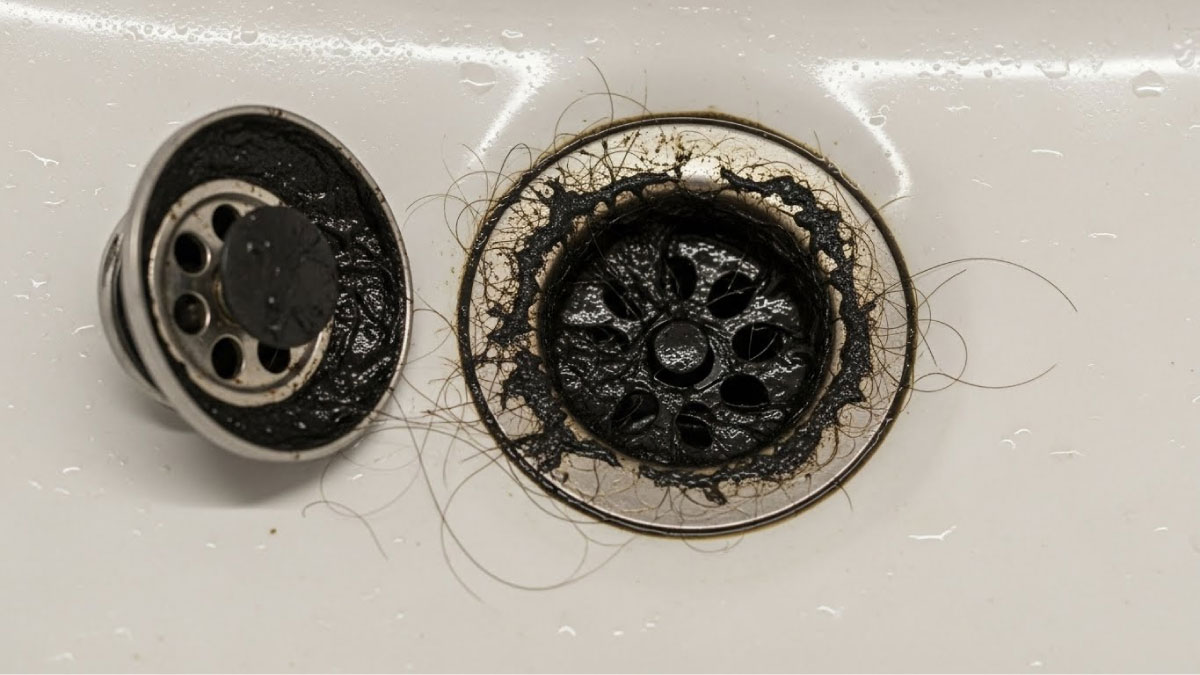
What Causes Black Material to Come Up From a Drain?
Black material can appear around or rise from a household drain when biofilm, soap residue, grease, sediment or deteriorating components release dark deposits. A restricted drainage line can also push dirty wastewater back towards a sink, shower or floor drain. The distinction matters: a thin coating around a bathroom drain differs significantly from foul-smelling water that actively rises through a basement opening. Colour alone cannot identify the substance. Its texture, location, timing, odour and effect on drainage provide more useful clues about what requires attention.
What Black Drain Material Actually Represents
Dark residue does not describe one substance or one plumbing failure. Drainage systems carry water containing small amounts of organic matter, detergent, oils and particles. Some ingredients cling to damp surfaces; others collect behind a restriction or travel back with wastewater.
Material that sticks around an opening may reflect local buildup. By contrast, water carrying debris upwards through a drain suggests an interruption to normal discharge and requires closer attention.
- Sticky black sludge: Grease, soap residue and decomposing organic debris may combine into a thick deposit.
- Slippery dark slime: Moist surfaces can support biofilm that traps dirt, personal care products and hair.
- Loose black flakes: Previously accumulated deposits or deteriorating components may shed fragments.
- Gritty particles: Sediment and certain mineral-containing deposits may collect around outlets or traps.
- Dark rising water: Wastewater carrying suspended solids may be returning because of a downstream drainage problem.
- Staining without loose material: A coloured surface may not contain removable sludge or indicate a blockage.
Colour and smell cannot establish the exact substance. The direction of water movement and performance of nearby fixtures offer stronger evidence.
Why Biofilm Forms Inside Household Drains
Microorganisms can attach to damp drain surfaces and create a thin layer called biofilm. Its sticky structure holds organic particles, allowing deposits to thicken where moisture and nutrients remain available. Inside a drain opening or trap, that sticky layer can gradually trap soap, skin oils and hair.
Biofilm does not always look black. Mixed debris and accumulated residues can make it dark brown, grey or nearly black. Some deposits feel slippery or gelatinous on wet components. However, a dark coating does not identify a particular bacterium or establish the presence of mould.
A surface can develop new buildup after cleaning if moisture and incoming organic material persist. Repeated rapid accumulation may also mean deposits remain deeper inside the fixture. Cleaning the visible ring alone cannot necessarily reach those areas, and aggressive chemicals may create additional hazards without solving the source.
Bathroom Residue: Soap, Hair and Personal Care Products
Bathroom drains collect materials that behave differently from kitchen waste. Toothpaste, shaving products, soap residue, body oils and hair can cling to nearby fittings and form stubborn deposits.
Bathroom Sinks and Pop-Up Stoppers
Pop-up drain assemblies provide surfaces where toothpaste, soap and skin oils collect. Hair may wrap around the stopper mechanism, trapping more debris and slowing drainage. When someone lifts the stopper or runs water, a dark clump may move into view. If the basin empties normally and only a small ring remains, ordinary surface buildup is plausible.
Continued slow emptying, recurring clumps or unpleasant odours may suggest accumulation farther down the waste connection. Avoid assuming that every deposit comes from a sewer problem.
Showers and Bathtubs
Long hair, body oils and soap residue frequently gather near shower strainers and bathtub waste openings. A partial hair obstruction may hold dark sludge beneath the visible cover. Successive showers can dislodge pieces, making the drain seem to produce black particles.
A shower that pools water during ordinary use deserves more attention than a small removable deposit. If another fixture causes water to rise in the shower, the shared drainage route may have a restriction beyond the opening.
Kitchen Drains: Grease and Food Debris
Cooking fats and oils can cool and cling to kitchen drainage surfaces. Food particles, detergent residue and other debris then attach to those deposits, gradually creating dark, sticky material. Repeated grease disposal increases the amount available for accumulation, particularly in slower-flowing sections.
A kitchen sink may empty slowly, smell unpleasant or release black particles after a surge of water. These symptoms are compatible with buildup but cannot reveal its depth or exact composition. Dishwasher discharge or a second bowl can dislodge debris in a shared branch.
Avoid pouring fats into the drain. Collect cooled cooking oil and grease for suitable local disposal. Boiling water does not reliably remove hardened deposits throughout a drainage system and may be inappropriate for some fixtures or piping arrangements.
Sediment, Mineral Deposits and Deteriorating Components
Not every dark particle originates from food or biological buildup. Particulate matter can accumulate near drain openings, while certain mineral-containing deposits may appear dark. Water chemistry sometimes contributes manganese-related staining, although colour cannot confirm that composition. Some surfaces also retain staining after loose deposits disappear.
Check where particles first become visible. If black specks appear directly in clean water flowing from the faucet, they may originate on the supply side rather than rise from the waste pipe. Ageing rubber washers, flexible hose linings or other suitable components can occasionally release dark fragments. Likewise, incoming water may carry sediment in some cases.
If particles emerge only when a backed-up drain releases water, an internal drainage deposit becomes more plausible. Distinguishing the delivery water from the wastewater prevents unnecessary work on the wrong plumbing system. Seek appropriate assessment when similar particles repeatedly appear at several clean-water outlets.
How Partial Blockages Push Dark Debris Back
A partial blockage narrows a passage without stopping every discharge. Hair, food residues and grease can catch additional material, especially at bends or other restrictive locations. When someone runs water, the level behind that obstruction may rise temporarily. Changing flow can loosen accumulated debris and move it towards a fixture opening.
Consider the operating pattern rather than the black colour itself. A sink that empties slowly and releases sludge after plunging may contain an obstruction near its trap or branch. When one fixture causes another to gurgle or fill, a shared section may need investigation.
Plunging or mechanical drain cleaning can release old material, so black debris immediately afterwards does not prove a new fault. Equally, the apparent release of debris does not establish that the blockage has cleared. Continued slow drainage, recurring backups and standing water warrant further assessment rather than repeated chemical treatment.
When Dark Wastewater Signals a Sewer Backup
A genuine drainage backup occurs when wastewater cannot leave through its intended route and returns through a connected opening. Lower fixtures, particularly basement floor drains, may provide an outlet when a shared building drain or downstream sewer becomes restricted. This situation differs substantially from slime coating a stopper.
Warning patterns include:
- Water rising through a floor drain while someone flushes an upstairs toilet.
- Several fixtures draining slowly or backing up around the same time.
- A basement drain overflowing with dark water and suspended debris.
- Strong sewage odours together with abnormal wastewater movement.
- Recurring discharge after a previous attempt to clear the drain.
Canadian homes may connect to municipal sewers or private septic systems. An obstruction in the building drain can affect either arrangement. In some locations, heavy rainfall or rapid snowmelt may contribute to sewer surcharge and basement backups, but weather does not explain ordinary residue around a bathroom opening.
Stop using affected fixtures if wastewater returns, and keep people and pets away from potentially contaminated areas. Avoid contact with standing water and electrical equipment. Significant sewage contamination calls for professional drainage assessment and appropriate cleanup precautions.
Where the Material Appears Changes the Likely Cause
A drain's location provides context, particularly when combined with flow and odour observations.
Basement Floor Drains
A basement floor drain may contain ordinary sediment or dust near its opening. Nevertheless, actively rising water after toilet flushing, laundry discharge or heavy rainfall raises concern about a downstream restriction or sewer backup. Record the triggering event without approaching contaminated water.
Laundry and Utility Drains
Laundry wastewater can carry lint, soil and detergent residue. Those particles may collect in accessible strainers or settle in a drainage connection. Dark debris accompanied by a slow utility sink might indicate a local restriction. If water spills from a standpipe during machine discharge, the drainage capacity or a blockage requires prompt investigation.
Shared Drains in Multi-Unit Buildings
Apartments and condominiums may share drainage stacks or branch connections with neighbouring units. If wastewater rises unexpectedly when the affected household uses no fixture, activity elsewhere in the building may be relevant. Report the symptoms to building management promptly rather than attempting work on shared components.
Safe Cleaning and Hygiene Precautions
Minor deposits on accessible drain covers or openings may allow straightforward cleaning when no sewage backup, unknown chemical residue or significant obstruction exists. Wear suitable gloves, prevent splashing and follow the fixture manufacturer's cleaning instructions. Remove accessible hair and loose debris carefully without forcing tools into hidden piping. Wash hands afterwards.
Never mix bleach with acids, ammonia or other drain cleaners. Different drain-cleaning chemicals can react dangerously, while residual chemicals can expose anyone who later handles the drain. Avoid repeated corrosive treatments when the cause remains uncertain. Household vinegar or baking soda also cannot reliably correct an obstructed sewer line.
If dark wastewater actively rises, stop routine cleaning and avoid direct contact. Keep children and pets away. Do not open traps or wastewater connections during a backup, and leave extensive contaminated cleanup to appropriately equipped professionals.
Why Black Deposits Return After Cleaning
Cleaning may remove the visible material without reaching deposits deeper inside a branch. Moisture continues to reach the opening, while soap, grease, hair and other residues enter with everyday use. Consequently, some biological buildup can return even when the drain otherwise functions properly.
A thin surface ring reappearing gradually differs from thick sludge arriving with water after every use. Repeated slow emptying suggests a persistent restriction, while dark discharge in multiple fixtures raises concern about a shared drain. Record how quickly the material returns rather than repeatedly escalating chemical cleaning.
When a Plumber Should Inspect the Drain
Persistent recurrence, multiple affected fixtures and visible wastewater backup warrant qualified assessment. A residential plumbing service can examine the affected opening, evaluate discharge behaviour and check accessible traps, branches or downstream lines as symptoms justify. Mechanical clearing may remove a confirmed obstruction; a camera inspection may help locate recurring restrictions or damaged piping when simpler methods cannot establish the cause.
Not every dark coating needs an inspection camera, and replacing whole drain lines rarely makes sense before identifying a defect. Professionals should also consider the home's drainage arrangement, including municipal connections or private septic equipment, and follow applicable local requirements.
Prevention begins with limiting avoidable debris: capture loose hair, dispose of cooking grease separately and clean accessible fixture parts when appropriate. Address slow drainage early, but distinguish routine cleaning from repeated wastewater backing up into living spaces.
Frequently Asked Questions
Why does thick black sludge collect in a bathroom sink?
Soap residue, toothpaste, skin oils and hair can collect around the stopper and mix with microbial biofilm. Moisture allows these deposits to persist, creating dark, sticky sludge. If the sink drains normally, cleaning accessible surfaces may help. Recurring slow drainage suggests that debris may extend farther into the connection.
Does black material in a drain always mean mould?
No. Dark residue can contain soap deposits, grease, soil, mineral particles or ordinary drain biofilm. Appearance alone cannot identify mould or any particular microorganism. Notice whether the material sticks to the opening or returns with wastewater. Persistent deposits may need cleaning, while active backups require a different response.
Can bacteria create black slime inside a drain?
Microorganisms can develop biofilms on moist drainage surfaces. Those films trap household debris and sometimes become dark or slippery. The colour does not identify a specific organism or establish a particular health hazard. Clean accessible deposits with appropriate precautions, and investigate persistent drainage trouble rather than relying on appearance for diagnosis.
Why do black particles appear after running water?
Flow may loosen old deposits around a drain opening or carry sediment from a partially restricted branch. However, particles arriving directly with clean tap water can originate in the supply system. Observe where they first appear. Repeated fragments at several faucets warrant a different investigation from debris emerging during drainage.
Can kitchen grease create black drain buildup?
Yes. Cooking fats can cling to drain walls and trap food particles, detergent residue and other debris. As deposits accumulate, they may darken and restrict discharge. Dispose of cooled grease separately, and avoid relying on boiling water or repeated chemical cleaners to clear an established obstruction deeper in the line.
Does black sludge prove that a drain is blocked?
No. A thin dark coating can develop in a freely draining fixture. A blockage becomes more plausible when water empties slowly, pools around the outlet or backs up during normal use. Colour cannot reveal the obstruction's location. Persistent symptoms may require an inspection of the trap or connected branch.
Why does dark material return soon after cleaning?
Cleaning may remove the visible ring while leaving material inside the stopper assembly or downstream piping. Continued soap, grease and hair accumulation can also renew deposits. Gradual surface buildup differs from repeated sludge discharge with standing water. If drainage remains slow, further assessment may identify a persistent restriction.
Can black wastewater from a floor drain indicate sewage backup?
Yes. Dark water rising through a basement floor drain may indicate that wastewater cannot pass through a downstream connection. Concern increases when toilets affect nearby drains, several fixtures back up or sewage odours appear. Stop using affected fixtures, avoid contact and arrange urgent plumbing assessment when wastewater enters occupied areas.
Is it safe to clean black drain residue at home?
Minor deposits on accessible surfaces may allow careful cleaning with suitable gloves and fixture-safe products. Prevent splashes and wash hands afterwards. Never mix bleach, acids, ammonia or drain cleaners. Do not dismantle wastewater connections during backups or handle suspected sewage. Significant contamination requires professional assistance and appropriate hygiene precautions.
When should I contact a plumber about black drain material?
Seek assessment when dark material repeatedly accompanies slow drainage, strong sewage odours, gurgling or wastewater returning through fixtures. Multiple affected drains and basement backups deserve prompt attention. A small removable surface deposit may need only routine cleaning, but recurring discharge or standing wastewater requires investigation of the connected drainage system.
Conclusion
Black drain material can reflect biofilm, household residue, grease, sediment or deteriorating components. Its appearance alone cannot identify the source. A dark coating around one opening often calls for a different response from wastewater rising through a basement floor drain. Observe the material's texture, location, odour and relationship to drainage performance. Clean only minor accessible deposits safely, and seek professional help when backups, multiple affected fixtures or recurring restrictions suggest a more serious drainage problem.
← Back to Blog


