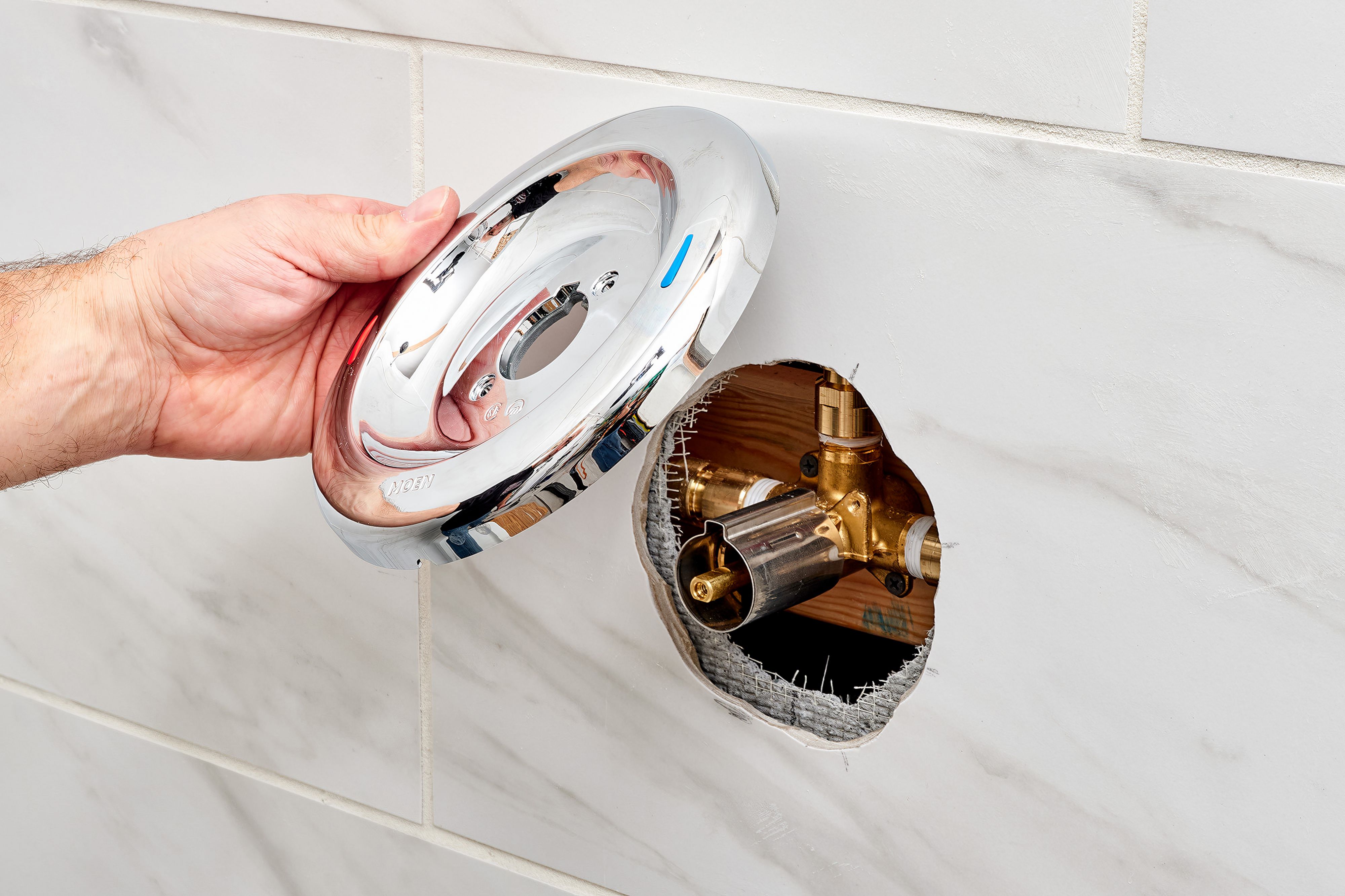
A pressure-balancing shower valve responds when the relative pressure of hot and cold water changes, helping the shower maintain a steadier mixture. If someone flushes a toilet or opens another tap, the valve can reduce an unexpected temperature swing by adjusting flow inside the fixture. This protection matters because a sudden increase in hot water can create a scalding risk. However, the valve does not directly measure water temperature, and it cannot correct every water heater or plumbing problem. Its condition and proper installation determine how reliably it responds.
What a Pressure-Balancing Shower Valve Actually Controls
A shower combines water from separate hot and cold supply lines. The handle selects a mixing proportion, while the supply system determines how much pressure and flow each inlet receives. Without automatic compensation, changes in those supplies can alter the mixture even when nobody moves the handle.
Pressure-balancing technology reacts to differences between the supply pressures. It aims to preserve the selected hot-to-cold proportion rather than holding the shower at an exact measured temperature. Consequently, shower flow may become weaker during a pressure disturbance even as the temperature remains relatively steady. This trade-off often explains why a shower briefly loses force when another household fixture starts operating.
The mechanism works within its designed pressure and flow conditions. If the water heater suddenly delivers cooler water while pressure remains stable, the balancing mechanism has no direct temperature signal telling it to add more heat. For that reason, stable pressure does not always mean stable shower temperature, even with a functioning valve.
How the Internal Balancing Mechanism Works
Although manufacturers use different arrangements, many pressure-balancing designs contain a movable spool, piston or equivalent component. Supply pressure acts on this component, which changes the openings available to hot and cold water.
Hot and Cold Water Enter Separately
The valve body connects to both supplies. Inside it, a cartridge or other mixing arrangement controls how water reaches the shower outlet. The user adjusts the handle, and the balancing mechanism responds to pressure differences without requiring another handle movement.
For example, imagine a toilet filling while someone showers. If that demand lowers cold-water pressure, the remaining hot-water pressure pushes the balancing component towards a position that restricts hot flow. This response helps prevent the hot proportion from increasing sharply. When conditions recover, the mechanism can move again.
Pressure Compensation Can Reduce Total Flow
Balancing does not manufacture pressure or increase the available cold-water supply. Instead, the valve may restrict the stronger side to match the weaker one. A brief reduction in total shower flow can therefore accompany successful compensation.
Mechanical movement must remain unobstructed. Debris, corrosion or mineral deposits may restrict the component, while worn internal parts can prevent normal operation. Exact components and service procedures vary by valve design.
Why Household Water Use Changes Shower Conditions
When several fixtures operate simultaneously, they compete for available water flow through shared pipes. The resulting pressure changes depend on pipe dimensions, water supply capacity, existing restrictions and the characteristics of each fixture.
Common examples include:
- Toilet refilling: The fill valve draws cold water after a flush, potentially affecting the shower's cold inlet.
- Washing machine operation: A laundry cycle may draw hot water, cold water or both, depending on its settings.
- Kitchen or bathroom taps: Opening another tap can change demand on a shared branch.
- A second shower: Simultaneous bathing may increase demand on both supplies.
- Supply pressure changes: Municipal variations or household pressure-control problems can alter inlet conditions independently of fixture use.
A pressure-balancing valve reduces certain temperature changes that unequal supply pressures would otherwise create. However, every flush or appliance cycle will not produce a noticeable shower response. Some homes have sufficient distribution capacity, and some competing fixtures have little effect on the relative inlet pressures. Conversely, falling hot-water pressure can make an uncompensated shower colder instead of producing a heat surge.
How the Valve Helps Limit Scalding Risks
A sudden reduction in cold-water pressure can allow a greater proportion of hot water through an uncompensated mixer. If the incoming hot water is sufficiently hot, that surge can scald skin before a person reacts.
Pressure balancing helps limit this particular hazard by reducing hot flow when cold pressure falls. Proper installation, a functioning internal mechanism and appropriate temperature-limit settings all contribute to the protection. Many shower controls include a limit stop that restricts how far a user can turn towards hot water; its adjustment must suit the equipment and applicable requirements.
Children, older adults and people with reduced mobility may have greater difficulty reacting quickly to unexpected changes. For households with these users, reliable controls and attention to unsafe symptoms deserve particular care.
Nevertheless, pressure balancing cannot guarantee protection against every hot-water surge. It does not directly compensate for a faulty heater that changes supply temperature, and incorrect adjustments can undermine protective performance. Avoid using a shower that suddenly delivers dangerously hot water until a qualified professional assesses the problem.
Pressure-Balancing Versus Other Shower Valve Types
Not every mixing valve responds automatically to changing conditions. Identifying the control type helps homeowners interpret its limitations and compare replacement options.
Ordinary Manual Mixing Controls
A basic manual mixer lets the user choose a hot-to-cold proportion but may not respond to disturbances in relative inlet pressure. Some older showers therefore change temperature when nearby fixtures operate. Still, handle appearance alone does not establish the internal mechanism: single-handle and multiple-handle products can contain different components.
Thermostatic and Combination Valves
A thermostatic shower valve senses changes in the mixed-water temperature and adjusts the mixture within its operating range. Unlike pressure-only balancing, this design can respond to some changes in incoming water temperature. However, insufficient hot-water supply, flow restrictions or damaged components can still limit its performance.
Combination valves provide pressure compensation alongside thermostatic regulation where their design supports both functions. The best option depends on household needs, available supply conditions, equipment compatibility and applicable local rules. Neither technology substitutes for proper hot-water system maintenance or safe temperature-limit settings.
What the Valve Contains and Why Parts Matter
A typical assembly includes a valve body, separate inlets, a control handle and internal passages. Many models also use a replaceable cartridge, seals, a balancing spool and a maximum-temperature limit stop. Other designs distribute these functions across different components.
The valve body connects the fixture to the supply pipes and remains behind the wall. The cartridge manages mixing and, in some models, balancing. Seals keep water in the intended passages; the handle allows temperature and sometimes flow adjustment. A damaged seal may cause leakage, while a sticking spool may cause unstable pressure compensation.
Replacement parts must match the actual product. Similar-looking handles or trim plates do not guarantee interchangeable cartridges. A homeowner can check installation records, visible markings and available documentation without dismantling concealed plumbing. Keep installation records to simplify future maintenance and replacement part identification.
Recognising a Valve That May Need Attention
Changes in shower behaviour can suggest a faulty balancing mechanism, although they cannot prove it. Record when symptoms appear and whether other fixtures experience related problems.
Watch for these signs:
- Unexpected temperature swings: The shower becomes sharply hotter or colder when another fixture operates.
- Unusual flow changes: Water flow drops excessively or fails to recover after household demand ends.
- Difficult temperature adjustment: The handle sticks or produces an inconsistent response.
- One-sided restriction: The shower receives unusually little hot or cold water despite adequate supply elsewhere.
- Visible leakage: Water appears around the handle, trim or accessible connections.
A single-shower problem makes its valve or nearby branch pipes worth examining. However, if several taps behave similarly, water heater performance, distribution restrictions or wider pressure conditions may be more relevant. Inconsistent symptoms deserve diagnosis before anyone orders replacement parts. Note whether symptoms occur only at particular handle positions, because this observation may help narrow the investigation.
Mineral Deposits, Wear and Sensible Maintenance
Water quality varies across Canada. In some households, dissolved minerals gradually form deposits inside plumbing components. Debris from ageing pipes or previous plumbing work may also enter a valve and interfere with movement.
What Homeowners Can Check Safely
Review the fixture's available product information and any maintenance instructions. Note changes in temperature, handle resistance and flow. Check whether accessible supply valves appear fully open, without forcing seized controls or altering concealed fittings.
Do not remove cartridges from a pressurised system or attempt unfamiliar adjustments behind the wall. Some models need specialised service parts or procedures, and improper reassembly may create leaks or interfere with temperature protection.
Routine attention should follow the actual equipment requirements, not a universal cleaning schedule. When mineral buildup or damaged seals affect operation, a qualified plumber can assess whether appropriate servicing or component replacement makes sense.
Replacing or Upgrading an Existing Shower Valve
An older shower may accept a compatible replacement cartridge, but cartridge replacement and complete valve replacement are different jobs. A new cartridge generally works only with a matching valve body. Changing the whole assembly may require access to concealed piping and alterations to the finished wall.
Before selecting equipment, consider:
- Existing valve identification: Determine the product design and available compatible parts.
- Wall access: Check whether installers can reach supply connections through an access panel or finished surface.
- Pipe compatibility: Confirm suitable materials, connection arrangements and space for the new body.
- Trim and controls: Ensure the handle and visible fittings suit the selected valve.
- Safety adjustment: Include proper limit-stop adjustment and functional testing after installation.
- Local requirements: Confirm whether alterations trigger permits, inspections or authorised trade work.
Correct hot and cold connections, leak testing and checks under realistic operating conditions matter. A new decorative handle cannot convert an incompatible older valve into a pressure-balancing design.
Canadian Plumbing Requirements and Practical Limits
Canadian national model plumbing codes address water temperature control, while provincial and territorial authorities determine which provisions apply within their jurisdictions. Local amendments and the age or scope of an installation can affect requirements. Relevant standards also cover plumbing supply fittings, including automatic compensating shower valves.
Homeowners should therefore confirm current rules with the responsible authority before installing or replacing equipment. Do not assume an existing older valve meets every current requirement, or that every renovation automatically requires the same changes.
Even a compliant, properly functioning pressure-balancing valve cannot correct an undersized hot-water supply, a heater malfunction, a severe restriction or conditions outside its operating range. If the shower gradually cools despite stable pressure, investigate hot-water availability rather than blaming the balancing mechanism alone.
When Professional Plumbing Assessment Makes Sense
Contact a qualified professional when the shower produces dangerous heat surges, a valve leaks, compensation appears unreliable or the handle becomes difficult to operate. Concealed pipe modifications and uncertain cartridge compatibility also warrant technical assessment.
A residential plumbing service can inspect the valve arrangement, evaluate inlet conditions and identify whether repair or replacement suits the symptoms. Where several fixtures fluctuate together, the investigation may need to extend beyond the shower to household distribution or water heating equipment. Avoid paying for a complete valve replacement before the cause becomes reasonably clear.
Frequently Asked Questions
What Does a Pressure-Balancing Shower Valve Do?
It responds to changes in relative hot and cold supply pressure to help preserve the shower's selected mixing proportion. For example, it may reduce hot flow when cold pressure falls. This action limits certain sudden temperature changes, although the valve does not directly measure actual outlet water temperature.
How Does a Pressure-Balancing Shower Valve Work?
Many designs use a movable spool, piston or equivalent component inside the valve. When pressure falls on one inlet, the mechanism restricts flow from the stronger supply. That response helps stabilise the hot-to-cold mixture. Overall shower flow may decrease temporarily, and internal arrangements vary between products.
Does a Pressure-Balancing Shower Valve Prevent Scalding?
It reduces some scalding risks that arise when unequal pressure changes cause unexpectedly hot water. However, it cannot eliminate every hazard, especially if incoming hot-water temperature changes or equipment fails. Proper installation, functional parts and suitable temperature-limit settings remain essential. Stop using a shower that delivers dangerously unpredictable heat.
Why Does Flushing a Toilet Change Shower Temperature?
A toilet draws cold water while its tank refills. In some piping arrangements, that demand lowers cold pressure at the shower and increases the hot proportion. A functioning pressure-balancing valve can restrict hot flow to compensate. The effect depends on supply capacity, pipe layout and the valve's condition.
How Is a Thermostatic Valve Different From a Pressure-Balancing Valve?
Pressure-balancing valves react primarily to relative supply pressures; thermostatic valves respond to mixed-water temperature. Consequently, a thermostatic control may compensate for some incoming temperature changes that a pressure-only mechanism cannot address. Both have operating limits, and suitable selection depends on plumbing conditions, intended use and applicable requirements.
Are Pressure-Balancing Shower Valves Required in Canadian Homes?
Canadian plumbing rules commonly address automatic shower temperature compensation, but jurisdictions adopt and modify model-code provisions differently. Acceptable arrangements can include different compensating technologies depending on local requirements. Before renovation or replacement, confirm the rules that apply to the property, installation type and relevant inspection or permit obligations.
How Can I Tell Whether My Shower Has One?
Check the fixture's documentation, installation records or accessible product markings for its model and valve type. A single handle alone does not confirm pressure balancing, and visible trim may conceal different internal designs. If records cannot identify the assembly, ask a qualified plumber rather than opening pressurised plumbing.
What Signs Suggest a Faulty Pressure-Balancing Valve?
Warning signs include unexpected temperature changes during household water use, sticking controls, restricted hot or cold flow and leakage around the fixture. Mineral deposits or damaged components may contribute, but other plumbing faults can produce similar symptoms. Compare nearby taps and record when problems occur before arranging assessment.
Can I Replace an Old Shower Valve With a Pressure-Balancing Valve?
Often, but installation depends on wall access, existing pipe connections, available space and compatible fittings. Replacing the entire valve body differs from fitting a compatible cartridge. A plumber can assess the arrangement, check local requirements and test temperature-limit controls. Changing the handle alone will not add pressure compensation.
When Should I Call a Plumber About the Shower Valve?
Seek professional help when the shower produces dangerously hot water, leaks, responds unpredictably to household demand or resists normal temperature adjustment. A plumber can check the cartridge, valve body and supply conditions. Persistent problems across several fixtures may instead indicate a wider pressure or hot-water system issue.
Conclusion
A pressure-balancing shower valve helps keep the hot-to-cold mixture steadier when household water demand changes the relative supply pressures. Its mechanism can reduce sudden temperature swings, but it cannot directly correct every variation in incoming water temperature. Proper temperature-limit settings, compatible components and ongoing equipment condition matter just as much. If the shower develops unpredictable heat surges or recurring control problems, arrange a qualified assessment. Before replacing an older valve, identify its design and confirm which compensating arrangement suits the plumbing system.
← Back to Blog


