Why Does One Drain Smell While the Rest of the House Is Fine?
A bad smell from one sink, shower or floor drain often points to a problem close to that fixture. Other drains may remain odour-free because fixtures have separate fittings and traps. Lost trap water, accumulated debris and dirty drain components can create localised smells without affecting the entire house. Shared drainage defects can also affect one fixture. The timing, character and recurrence of the odour provide better clues than its location alone.
Why an Odour Can Stay Confined to One Fixture
Connected drainage pipes still experience different conditions near each opening. Bathroom sinks collect toothpaste and soap. Kitchen drains receive food debris and grease. A basement floor drain may remain unused for months. Consequently, one fixture can smell while others work normally.
Start by identifying whether the odour rises directly from the opening, collects inside a cabinet or appears near an adjacent appliance. Air movement can shift the apparent source. Isolation also does not exclude branch-pipe or vent faults. Associated symptoms help narrow the possibilities.
Common Causes Inside the Affected Drain
Check local buildup and water seals before suspecting the main sewer. Symptoms overlap, but changes after water use or cleaning offer clues.
A Dry or Disturbed P-Trap
A P-trap is the curved pipe beneath many sinks and other fixtures. Its bend holds water, creating a barrier that limits the movement of sewer gases towards the room. The barrier needs sufficient water.
In a rarely used guest bathroom or utility area, evaporation can gradually reduce that water. Dry indoor air can contribute. Likewise, an unused basement floor drain can lose its seal, although floor-drain configurations vary.
Running water into a suitable fixture may refill its trap and stop the odour. However, a smell that returns shortly afterwards deserves further attention. Leakage, siphonage from drainage pressure changes or an incorrectly configured assembly can compromise the seal. Water cannot repair those faults.
In some buildings, a floor drain includes a device that replenishes trap water automatically. A faulty device may allow the seal to drop. A plumber can check whether that arrangement exists and works properly.
Biofilm and Decaying Organic Material
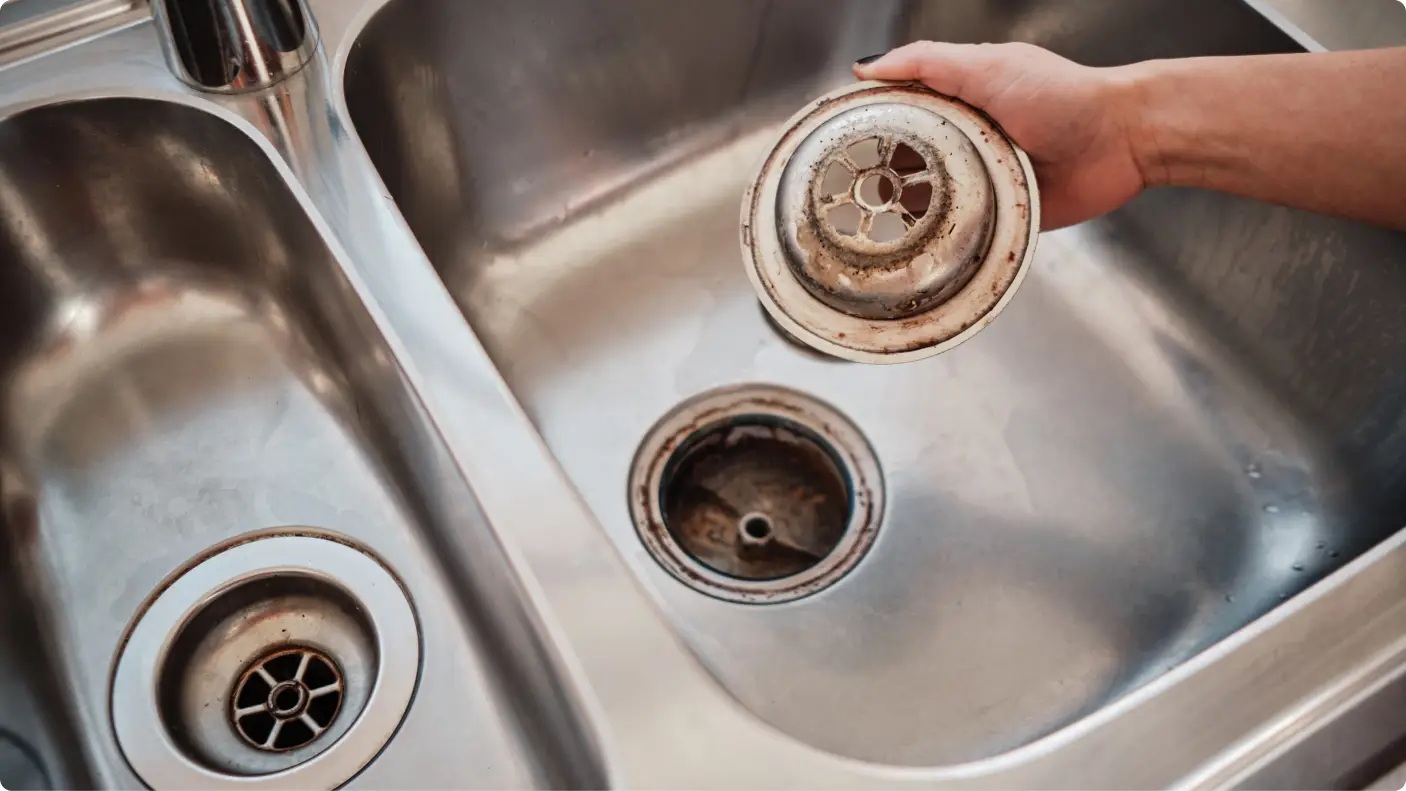
Moist drain surfaces collect a film of microorganisms and organic residue. Soap, toothpaste, skin oils and hair can accumulate around a bathroom stopper, while kitchen drains collect grease and food particles. Microbes produce odours even when water flows freely.
A smell that grows stronger during water use may come from disturbed deposits. Warm water may intensify existing odours, but this pattern cannot confirm the cause. Material near the opening differs from residue deeper inside the pipe, so cleaning the visible basin may accomplish very little.
Accessible strainers and removable stoppers often provide sensible starting points. Persistent smells may indicate overflow or deeper pipe deposits.
Partial Blockages That Hold Debris
Partial obstructions can slow drainage. Hair, grease and other material can catch additional waste, creating a damp pocket where organic matter remains longer than it should. Trapped debris may explain recurring smells.
Look for slowing, temporary pooling or gurgling. These signs justify closer assessment, but an ordinary smell without flow problems does not prove a blockage. Avoid pouring harsh drain cleaners into an unidentified obstruction, especially if someone has already used another chemical product.
Dirty Overflows, Stoppers and Drain Fittings
Some bathroom sinks contain a small overflow opening near the upper edge of the basin. Its passage can retain hidden residue. A dirty stopper mechanism or drain tailpiece, the short pipe below the outlet, may cause similar trouble.
Clean only the parts that you can access safely and according to the fixture's instructions. If contamination appears to sit inside concealed channels or connections, a qualified plumber can assess suitable cleaning or repairs without damaging the fixture.
How Fixture Type Changes the Likely Cause
Location changes the likely explanation. Consider drain contents, use and nearby connections.
Bathroom Sinks, Showers and Bathtubs
Bathroom sink stoppers collect toothpaste, soap scum and hair where the mechanism meets the drain opening. Shower strainers and bathtub outlets also retain hair and washing products. Cleaning accessible parts may help if drainage remains normal.
For a little-used guest shower, consider trap evaporation instead. If the smell appears immediately after another fixture drains and you hear gurgling, a pressure-related disturbance becomes more plausible. Neither pattern confirms a diagnosis.
Kitchen Sinks and Dishwasher Connections
Food scraps and grease cling to strainers and drain surfaces. Small deposits can smell of decaying food. Scrape plates into household waste rather than washing solids into the sink, and avoid sending cooking fat down the drain.
A nearby dishwasher may contribute its own odour through a dirty filter, retained food or drainage connection. If the smell seems strongest after a dishwasher cycle, compare the appliance interior with the sink opening. Deteriorating connections may require inspection; not every kitchen has a waste-disposal unit.
Basement and Laundry-Room Drains
A basement floor drain may smell because little water enters its trap, particularly in spaces without routine floor washing. Carefully adding water to a suitable trapped floor drain can help test that possibility. However, never assume every floor opening has an ordinary accessible trap.
Laundry areas may also contain standpipes and appliance connections. Watch for escaping wastewater, leaks or odours near the washer rather than automatically blaming the floor drain. Notify property management about suspected shared plumbing defects.
What the Smell and Its Timing Suggest
Odour descriptions offer clues, not diagnoses. Different materials smell alike, and ventilation affects intensity.
- Sewage-like: A compromised trap seal or defective drainage connection becomes a consideration, particularly alongside gurgling or recurring odours.
- Musty: Damp cabinet materials, mould or stagnant residue may contribute, so inspect for visible moisture around the fixture.
- Decaying food: Kitchen strainer deposits, retained scraps or nearby appliance residue deserve attention.
- Stagnant water: Little-used fixtures and debris that holds moisture offer possible explanations.
- Rotten eggs or sulphur: Organic processes, water-related sulphur compounds or sewer gases may produce similar descriptions; smell alone cannot distinguish them.
Does the Odour Come From the Water Instead?
Water can create an apparent drain smell. If the water itself has an odour, note whether it occurs with cold water, hot water or both. Compare another tap without leaning into an opening or intentionally inhaling fumes. Several affected taps suggest checking the water supply or heater.
Treat a suspected natural gas leak differently. If a strong rotten-egg smell could come from fuel gas, leave the area immediately, avoid switches and ignition sources, and contact emergency services or the gas utility from a safe location. Do not continue drain checks.
When the Problem Lies Beyond Surface Residue
Recurring odours can reflect drainage geometry or pressure. Sounds, water movement and leaks offer better clues.
Venting and Changes in Drainage Pressure
Vents balance airflow and drainage pressure. Under some conditions, pressure changes can disturb water inside a trap. A compromised seal may then allow drainage odours into a room.
Listen for gurgling when another sink empties or a toilet flushes. Repeated seal loss warrants vent or branch-pipe assessment. Nevertheless, a blocked roof vent should not become the automatic explanation for a single smelly sink. Leave roof access and concealed vent work to qualified professionals.
Cold conditions can affect exposed or unprotected vent components, but a wintertime smell does not prove an ice blockage. Gurgling or changes after other fixtures empty offer better clues than outdoor temperature alone.
Leaks, Damaged Seals and Incorrect Fittings
Loose joints, deteriorating seals, damaged pipes or unsuitable trap arrangements may create a route for odours. Inspect visible cabinet areas for dampness, staining and drips without taking apart concealed connections. A leak might also support mould growth in surrounding materials.
Keep the source distinction clear: a smell around a toilet base can originate from its seal or nearby fittings rather than the sink drain. Older homes may have ageing fittings, although age alone cannot confirm a defect. Renovated plumbing can also contain installation defects.
Nearby materials can also mislead. Water trapped beneath a sink mat, within a cabinet panel or around a leaking connection may create a musty odour that appears to rise from the drain opening.
Safe Checks Before Arranging an Inspection
Observations can reduce unnecessary work and assist later inspection. Avoid trying multiple cleaners.
- Locate the strongest smell. Compare the drain opening, the surrounding cabinet and nearby appliances without exposing yourself to concentrated fumes.
- Note the timing. Record whether the smell follows water use, extended inactivity, dishwasher cycles or drainage from another fixture.
- Replenish an unused trap. Run water into a suitable sink, shower or trapped floor drain, then observe whether the odour returns.
- Clean accessible components. Remove ordinary debris from strainers or manufacturer-approved removable stoppers using mild cleaning methods appropriate for the material.
- Check drainage behaviour. Notice pooling, slower flow, gurgling, backing up or changes when other fixtures operate.
- Look for visible leaks. Check around accessible fittings and nearby surfaces for dampness without opening concealed sewage pipework.
After cleaning, allow time to observe whether the smell returns under similar conditions. Do not mix cleaning chemicals, combine drain products or pour boiling water into plumbing indiscriminately. These checks cannot assess concealed components.
If anyone has already poured a commercial drain cleaner into the fixture, tell the plumber before work begins. Residual chemicals can create hazards during clearing even when the cleaner did not cause the smell. If wastewater has backed up, avoid contact and arrange appropriate help instead of continuing routine cleaning.
When to Contact a Plumbing Professional
An occasional smell from a neglected stopper may resolve with safe cleaning. Persistent sewage-like odours, however, deserve investigation, especially when trap refilling provides only brief relief. A residential plumbing service can assess trap integrity, concealed connections and drainage performance when ordinary observations cannot isolate the cause.
Seek prompt professional attention if:
- Wastewater backs up into a fixture or floor drain.
- Several fixtures begin draining slowly or gurgling together.
- A water seal repeatedly disappears despite regular fixture use.
- Visible leaks, damp materials or damaged fittings accompany the smell.
- A strong sewer-like odour persists after basic checks.
Suspected fuel gas requires emergency action. In apartments, condominiums and rentals, report possible shared-system faults to building management or the landlord. Local responsibilities and permitted work vary, so clarify who should arrange an inspection.
Reducing the Chance of Recurring Drain Odours
Tailor maintenance to each fixture. Periodically run water through suitable rarely used drains so their traps retain water. Keep accessible strainers and stoppers free from hair, food scraps and soap buildup. Dispose of cooking grease and solid waste separately instead of relying on the drain to carry them away.
Notice slowing, gurgling or damp fittings. Record recurring patterns rather than masking them with fragrance or repeated chemicals. Cleaning cannot correct broken seals, venting faults or damaged pipes.
Conclusion
One smelly drain often points to a dry trap, contaminated fitting or retained organic waste near that fixture. A normal flow rate does not exclude residue, while repeated trap-seal loss, gurgling, leaks or backups raise concern about deeper plumbing defects. Start with safe observations and accessible cleaning, then reassess the smell. If it persists or returns alongside drainage problems, arrange a qualified inspection rather than relying on repeated temporary fixes.
Frequently Asked Questions
Why Does My Bathroom Sink Smell Only When I Run Water?
Water may disturb residue inside the stopper assembly, overflow passage or drain opening and release an existing odour. Warm water can make that smell more noticeable. Check accessible surfaces for slime and observe whether the basin drains slowly. Repeated smells despite cleaning may justify a closer inspection.
Can a Dry P-Trap Make Only One Drain Smell?
Yes. Each properly trapped fixture relies on its own water barrier, so a little-used drain can lose protection while the others remain unaffected. Run water to replenish a suitable trap and monitor the result. If the smell rapidly returns, a leak or pressure-related seal problem may need investigation.
Why Does My Kitchen Sink Smell When Other Drains Do Not?
Food particles, grease and dirty strainers can leave decomposing material near the kitchen outlet. The dishwasher filter or connection may also contribute. Check where the odour concentrates and whether it follows an appliance cycle. Clean accessible parts safely and arrange further assessment if slow drainage or recurring smells continue.
Can a Drain Smell Bad Even When Water Drains Normally?
Yes. Organic films on drain surfaces can smell before deposits become thick enough to restrict water flow. A dirty overflow passage or an impaired trap seal may also produce odours without obvious slowing. Normal drainage therefore offers reassurance about flow, but it does not rule out every local problem.
Why Does My Basement Floor Drain Smell Like Sewage?
An infrequently used trapped floor drain may lose water through evaporation, allowing drainage gases to become noticeable. Adding water may restore the barrier if that is the cause. However, odours that persist, quick water loss or wastewater backups require further assessment. Floor-drain designs vary between Canadian properties.
Can a Blocked Plumbing Vent Affect Only One Fixture?
A venting or pressure problem can sometimes affect a particular trap before other fixtures show symptoms. Gurgling during nearby drainage or repeated water-seal disturbance makes that possibility more relevant. Yet one smelly drain does not establish a blocked vent. Qualified plumbers should assess inaccessible vent components.
Why Does a Drain Smell Return After Cleaning?
Cleaning the visible opening may leave residue within an overflow channel, tailpiece or deeper pipe. Alternatively, a trap may lose its seal again, or a fitting may leak. Observe how quickly the odour returns and whether water use changes it. Repeated chemical treatments can introduce unnecessary risks.
How Can I Tell Whether the Odour Comes From the Drain or Water?
Notice whether the smell exists before opening the tap, then compare hot and cold water and another fixture. If several taps produce similar odours, investigate the water supply or heater rather than assuming a dirty drain. Avoid close sniffing when the smell is strong or potentially hazardous.
Is a Rotten-Egg Smell From One Drain Always Sewer Gas?
No. Sulphur-like odours can have several origins, including organic residue or certain water conditions. However, fuel gas can also carry a rotten-egg warning odour. If you suspect a natural gas leak, leave immediately, avoid electrical switches or flames and contact emergency responders or the gas utility from a safe location.
When Should I Call a Plumber About a Persistent Drain Odour?
Arrange an assessment when safe cleaning and trap refilling fail, when odours repeatedly return or when gurgling, leaks and slow drainage accompany the smell. Seek prompt help for wastewater backups or suspected sewer-gas entry. A professional can examine concealed connections without requiring you to dismantle potentially unsafe components.
← Back to Blog


