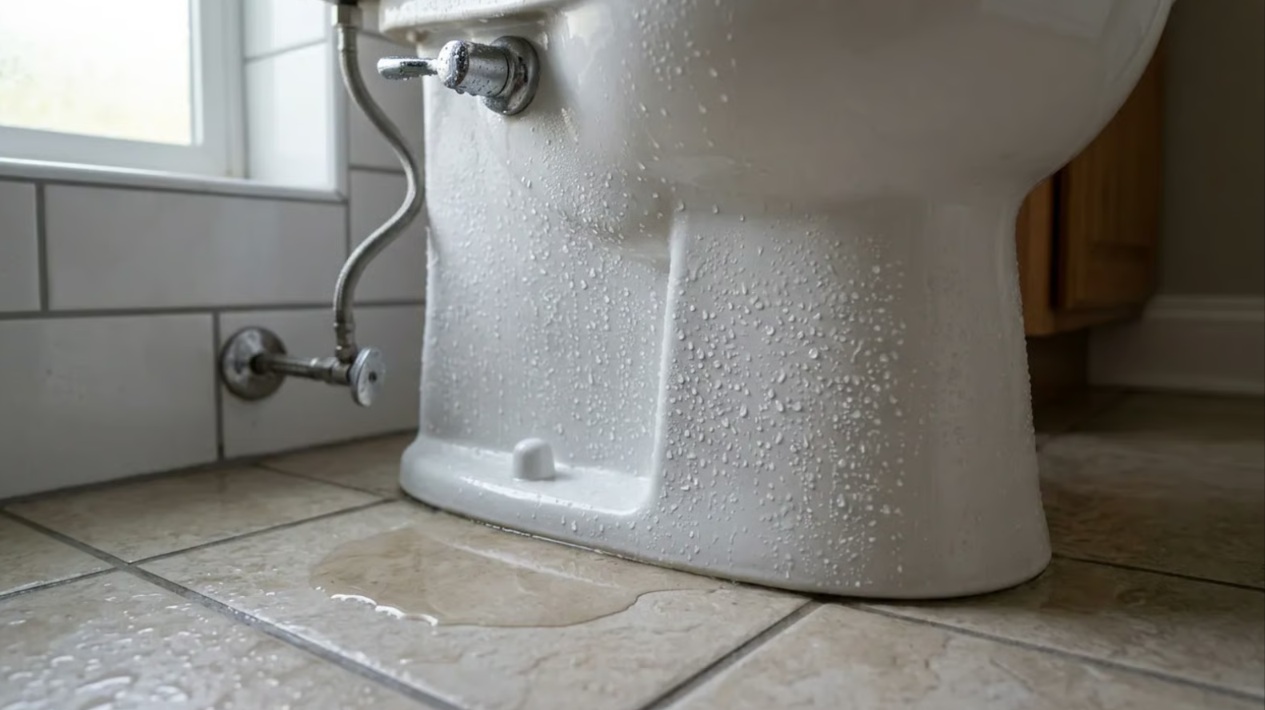
Water droplets on the outside of a toilet tank usually appear because warm, humid bathroom air meets the tank's cold surface. The moisture comes from the air, not necessarily from the toilet's plumbing. After a shower or during humid weather, enough condensation can collect to drip onto the floor. However, damaged fittings and actual leaks can create similar puddles. Checking where the water originates helps you choose between humidity control, toilet maintenance and plumbing repairs.
What Makes a Toilet Tank Sweat?
A toilet tank normally holds cold supply water. As that water cools the tank's ceramic walls, the outside surface may become colder than the surrounding bathroom air. Under suitable conditions, airborne water vapour changes into liquid droplets on the tank.
The Role of Humidity and Dew Point
Air contains invisible water vapour. Its capacity to hold vapour changes with temperature, while relative humidity describes how close the air comes to saturation at a particular temperature. The dew point marks the temperature at which that air becomes saturated as it cools.
When the tank's exterior falls below the surrounding air's dew point, vapour condenses on it. Higher humidity raises the dew point, making condensation possible even when the tank feels only moderately cool. Conversely, a cold tank can stay dry when the bathroom air contains little moisture.
Why the Water Is on the Outside
The tank does not need a crack for sweating to occur. Moist air reaches the cold porcelain from the room and deposits water on its exterior.
An actual plumbing leak follows a different path: water escapes from the tank, supply pipe, seal or connection.
Why Some Bathrooms Have More Condensation
Tank sweating depends on the difference between surface temperature and dew point, not simply on the season. Bathroom activities, water use and airflow can change both conditions within a single day.
Hot Showers and Humid Summer Weather
Hot showers release moisture into the room. If an exhaust fan cannot remove it effectively, the air's dew point rises. A tank that remained dry before bathing may then develop visible droplets within minutes.
Opening a window may help when outdoor air is drier, but humid outside air can make matters worse.
Very Cold Water and Repeated Flushing
Municipal supply lines and wells deliver water at temperatures that vary with location and season. Fresh cold water lowers the temperature of the ceramic tank after each flush. Frequent use can keep the tank cool long enough for droplets to accumulate.
A toilet that refills repeatedly without anyone flushing can have a similar effect. Although a healthy toilet normally stops filling once its tank reaches the correct level, a leaking internal component may continually replace warmer standing water with colder supply water.
Winter Heating, Room Layout and Airflow
Heated Canadian homes often have relatively dry indoor air in winter, which can reduce sweating. Still, long showers, poor ventilation or a particularly cold water supply can create condensation.
A toilet placed close to a wall or inside a cramped enclosure may have limited air circulation. Meanwhile, an uninsulated tank generally transfers cold water temperatures to its outer surface more readily than a suitably insulated model.
How to Distinguish Condensation From a Leak
Start with observations rather than dismantling fittings. Condensation and plumbing leaks sometimes leave similar water marks, but their patterns offer useful clues. No single observation provides a certain diagnosis, especially when more than one moisture source exists.
Check Where Moisture First Appears
Dry the entire tank with a clean towel, including its underside and visible fittings. Then monitor the surface without flushing for a short period. If tiny droplets develop across broad exposed areas, especially after a hot shower, condensation becomes a reasonable explanation.
A narrow wet trail that begins beside a particular bolt or connection points more strongly towards escaping plumbing water. Likewise, water that appears when the room feels dry deserves closer inspection. However, drips can travel along surfaces before falling, so the visible puddle may not mark the original source.
Inspect Supply Connections and Tank Seals
Look carefully at the supply hose, shut-off valve, connection beneath the tank and bolts that secure the tank to the bowl. Use dry tissue around accessible joints to see whether fresh moisture appears at a specific location. Check for corrosion, staining, mineral deposits or visible cracks without loosening anything.
Also inspect the tank-to-bowl area after flushing. A failing seal may release water primarily during a flush, whereas condensation can form without any flushing at all. Never tighten ceramic fittings aggressively: excessive force may damage the tank. If you suspect a crack, arrange prompt assessment rather than attempting an improvised patch.
Look Beyond the Tank
Water near the toilet's base may come from a seal beneath the bowl, a nearby bath, shower splashes, cleaning activities or condensation. Inspect surrounding surfaces before assuming the tank causes the puddle. Moisture that appears after flushing or accompanies an unstable toilet warrants professional attention.
Check whether grout lines, adjacent trim or flooring stay damp even when the tank looks dry. When water accumulates rapidly, shut off the toilet's supply if you can operate the valve safely, and seek help.
A Practical Homeowner Troubleshooting Routine
- Dry visible surfaces. Wipe the tank, supply line and floor so new moisture becomes easier to trace.
- Note bathroom conditions. Record recent showers, open windows, fan use and unusually humid weather.
- Watch the tank. Identify whether droplets spread across the ceramic or collect around one fitting.
- Listen for refilling. A toilet that hisses or starts filling unexpectedly may waste water.
- Check after flushing. Examine the tank-to-bowl junction and nearby floor for fresh, localised moisture.
- Repeat under drier conditions. Compare results after ventilation improves, rather than judging one isolated observation.
A simple hygrometer can help confirm whether humidity remains high, but it does not diagnose a leak. If the moisture persists or reaches vulnerable flooring, stop relying on observation alone.
Ways to Reduce Toilet Tank Condensation
Effective prevention targets either humid bathroom air, unnecessary cold-water replenishment or the cold surface itself. Match the intervention to the conditions you observed. Depending on the cause, humidity control, toilet repairs or insulation may help more than surface drying.
Improve Bathroom Exhaust Ventilation
Run the exhaust fan during showers and continue operating it afterwards so moist air leaves the room. An appropriately installed fan should discharge outdoors, not into an attic or enclosed ceiling space. Clean accessible fan grilles according to the equipment instructions, because accumulated dust can restrict airflow.
If the mirror stays foggy long after bathing or moisture repeatedly covers several cold surfaces, ventilation may need attention. A fan that makes noise does not necessarily move enough air. A qualified installer can assess its capacity, ducting and replacement options. Opening a window may help in dry conditions but offers less benefit during humid weather.
Manage Indoor Humidity
A hygrometer measures relative humidity and helps reveal patterns beyond the toilet. For general household moisture control, an indoor range around 30 to 50 per cent often provides a useful reference, although building conditions and winter temperatures affect the appropriate level.
Air conditioning or a suitable dehumidifier can lower humidity where ventilation alone proves insufficient. Basement bathrooms may benefit particularly when dampness extends beyond shower periods. Avoid using a humidifier near an already damp bathroom unless another household need clearly justifies it.
Keep Air Moving and Floors Dry
Move towels, storage baskets and other items away from the tank so they do not trap damp air against the ceramic. Improving circulation may help moisture evaporate, but airflow alone cannot prevent condensation when the tank remains below the air's dew point.
Dry puddles promptly to protect flooring and reduce slipping hazards. Nevertheless, towels placed permanently around the toilet merely absorb water; they do not correct the underlying conditions.
Can a Running Toilet Make Sweating Worse?
Yes. A faulty toilet may admit cold supply water repeatedly even when nobody flushes. That inflow can keep the tank walls colder for longer, increasing condensation whenever surrounding air contains enough moisture. A running toilet also wastes water, making repair worthwhile even if sweating remains mild.
The flapper is the flexible seal that holds water inside the tank until a flush releases it. A worn or poorly seated flapper allows water to enter the bowl slowly, prompting the fill valve to replenish the tank. Fill valve faults or incorrect float settings can also cause unexpected refilling or water entering the overflow tube.
Listen for persistent hissing or intermittent refill sounds. You can also place a small amount of suitable food colouring in the tank and wait without flushing; colour entering the bowl suggests water is escaping internally. Follow sensible precautions to avoid staining and never mix cleaning chemicals with the test.
If components appear damaged or adjustments feel unfamiliar, have a qualified plumber identify the fault. Fixing internal flow reduces waste but may not eliminate sweating during very humid weather.
Do Insulated Tanks and Anti-Sweat Devices Work?
Tank insulation creates a barrier that reduces heat transfer between cold tank water and the outer porcelain. As a result, the exterior may stay warmer and attract less condensation.
Before considering an insulation kit, check the tank's shape, internal clearances and compatibility with its flushing mechanism. Poorly fitting material can interfere with components or fail to protect exposed areas. Products differ, so follow the toilet and insulation manufacturers' applicable instructions rather than assuming a universal fit.
Where existing tank geometry makes retrofitting impractical, a properly matched insulated replacement may offer a more reliable option. However, changing a tank requires compatibility with the bowl and its fittings; an entire toilet replacement might sometimes make more sense.
Some plumbing systems use specialised anti-sweat valves to temper incoming cold water. Such arrangements need careful assessment of water temperatures, connections, component suitability and applicable local requirements. Homeowners should not improvise hot-water mixing connections. Ask a qualified plumber whether this approach suits the property before considering alterations.
What Happens If Condensation Continues?
Water may enter flooring seams, affect susceptible timber beneath the finish or damage nearby baseboards. Hard surfaces tolerate incidental splashes differently from materials that absorb moisture.
Persistent dampness also creates favourable conditions for mould growth, especially where ventilation remains poor. Damage depends on the amount of water, how long materials stay wet and how effectively the room dries between episodes. Neither one damp morning nor a small puddle establishes hidden structural damage.
Inspect the floor edges and surrounding finishes for swelling, discolouration, soft spots or recurring musty odours. Address moisture promptly and investigate deterioration instead of repeatedly covering the area with mats.
When Should You Contact a Plumber?
Contact a qualified professional if water repeatedly pools, the toilet runs constantly, fittings show damage or droplets persist despite reasonable humidity control.
A residential plumbing service can inspect connections, assess the tank's condition, repair malfunctioning internal components and discuss compatible insulation or anti-condensation equipment where appropriate. The right repair depends on the actual moisture source rather than the appearance of the puddle alone.
Tenants should inform their landlord or property manager promptly about unexplained water and document visible changes. If water spreads quickly or threatens nearby finishes, prioritise limiting the flow where safe and arranging timely assistance.
Frequently Asked Questions
Does a Sweating Toilet Tank Mean Something Is Broken?
Not necessarily. Warm, humid air can condense on a cold tank even when every plumbing component works correctly. However, a leak can resemble sweating. Dry the tank, check for widespread droplets and examine accessible fittings. Concentrated moisture near a connection or repeated puddles deserve further investigation.
Why Does My Toilet Tank Sweat More in Summer?
Warm summer air often carries more moisture, which raises its dew point. When relatively cold supply water chills the tank below that point, droplets form on its exterior. Poor ventilation can intensify the problem. Air conditioning, appropriate dehumidification and effective exhaust ventilation may reduce the moisture.
Can a Toilet Tank Sweat During a Canadian Winter?
Yes. Although heated indoor air often becomes drier during winter, shower moisture can temporarily raise bathroom humidity. Incoming water may also remain very cold. A basement bathroom or poorly ventilated enclosure can experience condensation in any season. Check conditions rather than assuming winter rules out sweating.
How Can I Tell Toilet Condensation From a Leak?
First dry the tank and visible connections. Droplets that reappear broadly across the porcelain during humid conditions suggest condensation. Water concentrated around bolts, hoses or seals may indicate a leak. Watch for moisture during and after flushing. These patterns provide clues, but persistent uncertainty warrants professional inspection.
Will Fixing a Running Toilet Reduce Tank Sweating?
It can help if the fault keeps bringing fresh cold water into the tank. A leaking flapper, faulty fill valve or incorrect float setting may trigger repeated refilling. Repairing that flow saves water and allows the tank to warm between flushes. High humidity can still cause condensation.
Can Better Ventilation Stop a Toilet Tank From Sweating?
Effective ventilation removes moist bathroom air and may lower its dew point enough to prevent droplets. Run an exhaust fan during and after bathing, and ensure it vents outdoors. Results depend on water temperature and surrounding humidity. During humid weather, dehumidification may also help when ventilation alone proves insufficient.
Is Toilet Tank Insulation a Permanent Solution?
Suitable insulation can reduce condensation by keeping the tank's exterior warmer. However, effectiveness depends on coverage, correct installation and compatibility with the toilet's internal parts. Some retrofit kits do not suit particular tank designs. Continued humidity problems or unrelated leaks may still require attention despite added insulation.
Can Sweating Toilet Tanks Damage Bathroom Floors?
Repeated drips can reach flooring seams, baseboards and moisture-sensitive subflooring. Prolonged dampness may also encourage mould, particularly in poorly ventilated spaces. The risk depends on water volume, materials and drying time. Wipe up moisture promptly and investigate swelling, staining or recurring wet patches rather than ignoring them.
Do I Need to Replace a Toilet That Sweats?
Usually not. Improving ventilation, controlling humidity or repairing a running mechanism may solve the problem without replacing the toilet. If an uninsulated tank repeatedly collects water despite those measures, a compatible insulated model could help. Compare replacement options with the existing toilet's design and condition first.
When Does Toilet Condensation Need Professional Attention?
Seek help when water repeatedly collects on the floor, visible fittings leak, the tank appears cracked or the toilet refills without flushing. Persistent sweating despite reasonable humidity management also merits assessment. A plumber can identify underlying plumbing faults and evaluate suitable equipment changes without unnecessary alterations.
Conclusion
A toilet tank sweats when humid bathroom air contacts a surface cold enough for condensation. Showers, summer humidity and repeated cold-water refilling can intensify the problem, while genuine leaks sometimes create similar puddles. Start by drying the tank and checking moisture patterns, fittings and toilet operation. Then improve ventilation, control excessive humidity and address unnecessary refilling. If water keeps returning or surrounding materials deteriorate, arrange a professional assessment rather than assuming every damp tank needs replacement.
← Back to Blog


