Published: Sep 25, 2026 • By Canadian Rooter
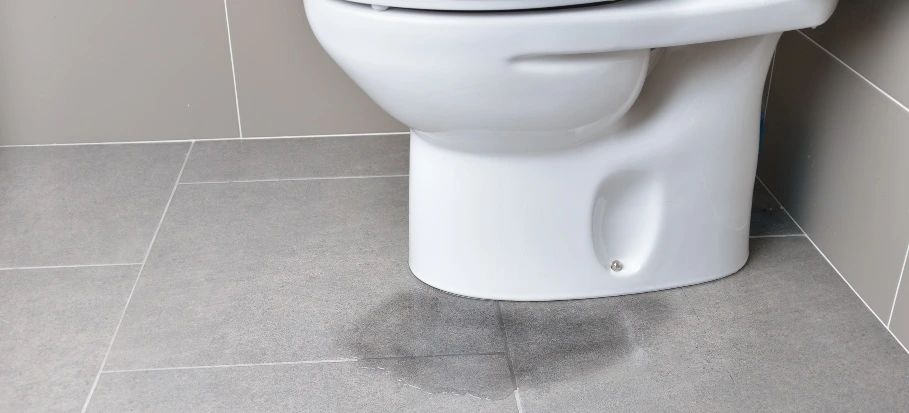
Water may appear around a toilet’s base because a supply connection drips, the tank leaks or sweats, a crack releases water, or the seal beneath the toilet lets water escape during a flush. Water at floor level does not necessarily start beneath the bowl. If each flush creates a puddle, stop using the toilet. Dry standing water to reduce slipping and floor damage, then look for its source without dismantling the fixture. If water keeps escaping, close the toilet’s supply valve if you can do so safely and arrange help.
Make the Area Safe First
Start by limiting active water and checking whether the floor remains safe underfoot.
Stop Use When Water Returns
If a flush produces fresh water around the base, avoid further flushes. Do not test the toilet repeatedly to see whether the leak persists. Where the bowl drains slowly, rises unusually high, or backs up, stop using it and nearby fixtures that may connect to the affected drain. Overflowing wastewater needs prompt attention and appropriate protection from contact.
Mop up standing water and dry accessible surfaces, including the supply line and tank exterior. Keep children and pets away from wet flooring, particularly if the water may contain waste.
Know When to Close the Supply
Locate the toilet’s shutoff valve on its supply line, usually behind or beside the fixture. If water continues escaping between flushes, turn a conventional valve gently clockwise, or operate its lever according to its design. Never force a seized, corroded, or leaking valve.
Seek urgent assistance if water spreads rapidly, wastewater backs up, a fixture has a visible crack, or you cannot stop an active leak safely. Tenants should use their building’s urgent maintenance contact.
Use Timing to Narrow the Source
Dry the floor first so you can distinguish new moisture from an older puddle.
Water Appears During a Flush
Fresh water escaping from beneath the bowl during or just after a flush may point towards the toilet-to-drain seal or a problem around the flange. Yet tank-to-bowl connections can also drip when the tank releases water, sending it down the outside of the fixture.
If the bowl rises rather than clearing normally, suspect a drainage restriction as another concern. Do not flush again merely to locate a leak when a backup or overflow could follow.
Water Appears Between Flushes
If you suspect a supply leak, leave the toilet unused and watch the dried connection briefly. A fresh droplet without a flush points towards a continuously pressurised part, although nearby moisture can still travel to the fitting.
A drip at the supply line, shutoff valve, fill-valve connection under the tank, or tank hardware may continue without anyone flushing. Check whether a drop forms at a fitting and runs along the line before reaching the floor. Even when moisture collects only beside the base, gravity can carry water from above to that location.
Tank condensation can also run down onto the floor, especially when cold tank water meets humid bathroom air. Its presence does not rule out a leak elsewhere, so look for a widespread film of moisture as well as distinct drips.
Water Follows a Shower or Cleaning
Moisture from a shower, bath, nearby basin, or floor cleaning may collect beside the toilet. Check surrounding surfaces and the direction water travels across the floor.
Follow a Careful Observation Sequence
If sewage, active leakage, or a high bowl makes testing unsafe, stop before the flush stage.
Dry, Inspect, and Record
When you wipe the floor, start beyond the visible puddle and work towards the fixture. That way, you can see whether new water spreads from the supply side, the back of the bowl, or its floor edge.
Use towels to dry the supply line, underside of the tank where you can reach safely, bowl exterior, and surrounding floor. Allow a short interval without using the toilet. Then inspect in this order:
- Look at the shutoff valve and supply connection for fresh droplets.
- Check the connection beneath the tank where the fill valve receives water.
- Look around tank bolts and the joint between tank and bowl.
- Feel for moisture on the tank exterior without pressing on fragile fittings.
- Check whether a new wet patch begins at the floor beside the bowl.
- Place dry tissue near an accessible connection to reveal a small drip, but do not wrap or leave material against fittings as a substitute for repair.
Consider One Controlled Flush
Only observe a single flush if the bowl drains normally, the floor remains safe to stand on, and no leak already flows actively. Keep the tank and floor visible where possible. Watch for drips from the tank-to-bowl joint and for water emerging at the base immediately after the flush. Stop using the fixture if water appears.
If the bowl water rises, wastewater appears, or an earlier flush clearly produced a puddle, skip this step.
Check Sources Above the Floor
Checking higher connections can prevent an unnecessary assumption about the hidden drain seal.
Supply Line and Shutoff Valve
The line that feeds the tank attaches to a shutoff valve and to the fill-valve connection beneath the tank. A loose fitting, worn washer, damaged line, or leaking valve can release clean supply water.
If a valve leaks when you touch it or will not operate normally, stop handling it. Do not overtighten fittings to chase a drip; excessive force can damage plastic threads or older connections. A plumber can determine whether a fitting needs careful adjustment or a compatible replacement.
Tank Bolts and Tank-to-Bowl Gasket
Many toilets use bolts and a gasket to join a separate tank to the bowl. Water may seep from a bolt opening or the joint, then run down the back or side of the bowl. The timing may coincide with flushing or with a full tank, depending on the fault.
Avoid tightening one bolt aggressively or unevenly. Ceramic can crack, and old hardware may break. If you see movement, corrosion, or a continuing drip, leave disassembly and replacement to someone who can support the tank and assess the seals.
Condensation, Splashes, and Cracks
A broad damp film differs from a distinct drip at one connection, although both can coexist. Dry the tank and observe whether moisture returns across a wide area during humid periods.
Inspect visible porcelain for cracks without leaning on the fixture. If you find a crack that leaks or appears to compromise the tank or bowl, stop using the toilet and request professional assessment. Do not apply sealant as a structural repair.
When Water Comes From Beneath the Toilet
If you cannot trace water from above and it appears at the bowl’s floor connection during flushing, the hidden joint deserves attention.
The Seal, Flange, and Mounting
The seal can lose contact after movement or an improper installation, but water at the base may also come from above and pool at the same location. A plumber may inspect the floor connection only after checking visible fittings. If wastewater comes from underneath, avoid contact and stop using the toilet until someone assesses it.
A toilet-to-drain seal connects the bowl outlet to the drain at floor level. If that seal no longer contains flush water, moisture may emerge around the base. A damaged or poorly positioned flange, which anchors the toilet above the drain, can also interfere with a sound connection.
A toilet that rocks may place strain on its seal or mounting hardware. However, movement alone does not establish that the seal has failed: uneven flooring, loose hardware, or a flange issue may contribute. Avoid rocking the toilet deliberately to test it. Repeated use of an unstable fixture may worsen leakage or damage.
Why Caulk Cannot Diagnose the Leak
A bead of caulk around the base can hide where water emerges and may trap moisture. It cannot repair a failed seal, damaged flange, cracked bowl, or leaking tank connection. Likewise, replacing the toilet-to-drain seal will not stop water that begins at a supply line or tank gasket.
A plumber may need to lift and reset the toilet to inspect a suspected hidden joint. That work can reveal whether the seal, flange, mounting hardware, or nearby flooring needs attention.
Why Persistent Moisture Matters
Repeated wetting deserves attention even when the exact source remains uncertain and hidden.
Flooring and Hidden Material
Repeated wetting may affect grout, flooring edges, adhesive, or material beneath the finished floor. Softness, staining, swelling, or an odour may warrant closer inspection, but visible water alone does not prove hidden damage. Dry what you can reach and avoid covering the area with a mat that keeps it damp.
If water contains waste, limit contact and arrange appropriate cleaning as well as leak repair.
Stop Risky Attempts
Do not force a supply valve, overtighten toilet bolts, try to seal a cracked fixture, or apply caulk to conceal the leak. Avoid repeated test flushes, especially if water appears each time. If the toilet shifts, the floor feels unstable, or water reaches an electrical fitting, stop using the area and seek urgent assistance.
When water reappears after you dry the area, arrange an assessment instead of assuming that a brief dry interval means the fault has disappeared.
Repair Options and Tenant Reporting
The appropriate repair depends on where water starts.
What a Plumber May Check
A plumber may inspect the supply connection, shutoff valve, fill-valve fitting, tank hardware, bowl, and floor connection. If water clearly starts above the floor, a compatible supply component or gasket may need repair or replacement. If evidence points beneath the toilet, the plumber may remove and reset it, replace its seal, or address a damaged flange or mounting arrangement.
Conversely, a visible crack can change the repair decision. When the source remains uncertain or the fixture moves, professional plumbing services Toronto can assess the water path and recommend work that addresses the actual fault.
Describe when water appears, whether it looks clean or soiled, and what you observed after drying the surfaces. Tell the plumber if the shutoff valve sticks or leaks.
What Tenants Should Report
If possible, note whether the water returns while nobody uses the toilet. That detail helps distinguish a continuous supply drip from a flush-related escape. Report any change in the floor, such as softness or swelling, without assuming its cause. If you need to shut off the supply, tell the property contact which valve you closed.
Notify your landlord or property manager promptly when water reappears, a flush produces a puddle, or any fitting drips continuously. Record the date, where fresh water first appears, and whether it occurs between flushes or after a shower.
Use the building’s urgent contact route for an active leak, sewage backup, or water that spreads into another area. Follow your tenancy’s maintenance arrangements before taking apart fittings or attempting repairs.
Frequently Asked Questions
Does a Base Leak Always Mean the Toilet Seal Failed?
No. Water from a supply line, tank bolt, tank-to-bowl gasket, or condensation can travel down and collect at the base. Dry the toilet and floor, then look for the first fresh drip. A hidden seal becomes more plausible when water emerges beneath the bowl during a safe flush.
Why Does Water Appear Only After Flushing?
A flush sends water through the tank-to-bowl joint and the drain connection. Either area may leak at that moment, and a crack may also release water under certain conditions. Trace visible drips from the tank downward. If the bowl rises or each flush produces a puddle, stop testing.
Can Tank Condensation Leave Water on the Floor?
Yes. Humid air can leave moisture across a cold tank’s outer surface, and droplets may run onto the floor. Dry the tank and watch whether a broad damp film returns. A distinct drip at one fitting suggests another source, and condensation does not rule out a separate leak.
Will Caulk Around the Toilet Stop the Leak?
Caulk cannot repair a leaking drain seal, supply connection, tank gasket, or cracked fixture. It may hide where water emerges and trap moisture beneath the toilet. Find the source before considering work at the base. If flush water appears from underneath, ask a plumber to inspect the hidden connection.
Should I Tighten the Bolts on a Rocking Toilet?
Do not overtighten them. Porcelain can crack, while loose or damaged mounting hardware may need more than a quick adjustment. A rocking toilet can strain its drain seal, but movement alone does not prove a seal failure. Stop using it if water appears, and arrange an assessment of the mounting.
When Should I Close the Toilet’s Supply Valve?
Close it if water keeps escaping between flushes and the valve operates easily. The valve cannot stop water already sitting in the bowl or tank, so you may still see a leak afterwards. Never force a seized valve or keep turning one that starts dripping; request help promptly.
Can Shower Water Make the Toilet Look as If It Leaks?
Yes. Water from a shower, bath, nearby basin, or cleaning can travel across the floor and collect beside the toilet. Dry the area and compare what happens after each fixture runs. If the toilet stays dry during use but water follows showers, check the other source.
Does Water Around the Base Mean Hidden Floor Damage?
Not necessarily. A fresh puddle does not establish what lies beneath the finished floor. Repeated moisture, softness, staining, swelling, or persistent odour raises concern and warrants inspection. Dry accessible surfaces and report how often water returns. Avoid covering the damp area before someone checks it.
Can I Keep Using a Toilet With a Small Base Leak?
Avoid using it if each flush produces water or the fixture rocks. Continued use may add moisture and create a slip hazard. If water escapes continuously, close the supply when safe. Arrange a repair and use another toilet if available. Treat sewage or rapidly spreading water as urgent.
What Should a Tenant Tell the Property Manager?
Report when you first noticed water, where it appears, and whether it follows a flush, occurs between flushes, or follows a shower. Mention a rocking toilet, dripping connection, high bowl water, or sewage. Send a photograph if convenient, but use the urgent reporting route immediately for active leakage.
Conclusion
Water at a toilet’s base may come from a fitting above the floor, condensation, another fixture, or the concealed drain connection. Dry the area and check visible sources first. Observe one flush only when the bowl and floor make that safe; stop using the toilet if each flush brings more water. Avoid forceful adjustments and cosmetic sealing. Persistent leakage, rocking, cracks, or sewage call for professional attention. Tenants should report when and where the water returns.
More posts: Back to Blog


